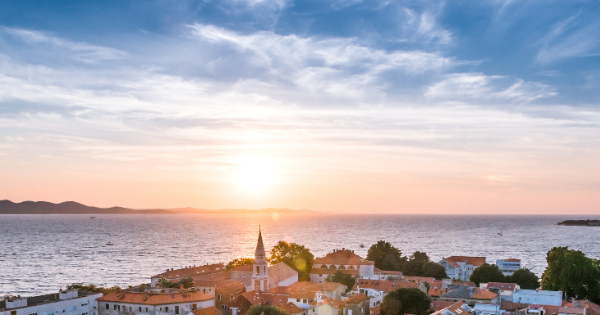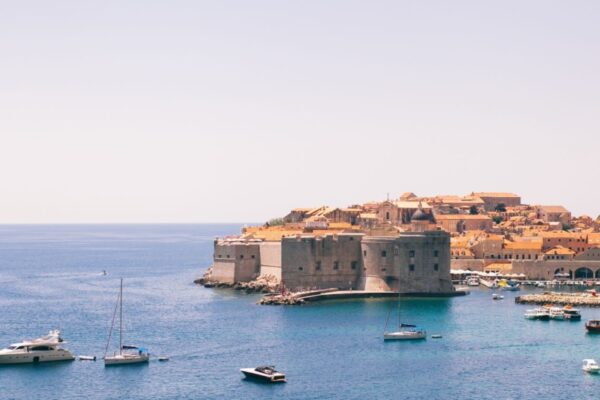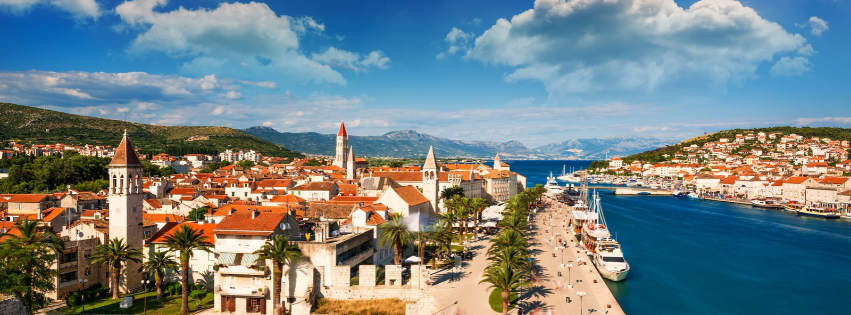
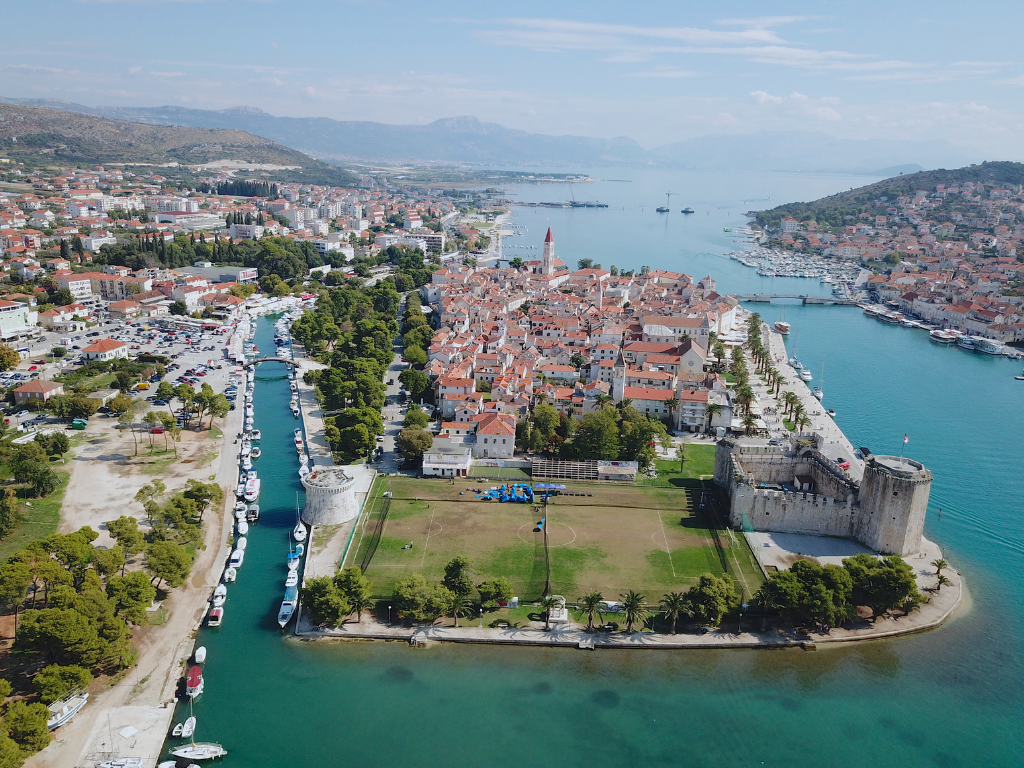
If you are looking for a place where history and the sea meet in one spot for your next holiday, your search is over! Today we are getting to know Trogir. The old town sits on a small island between the mainland and the island of Čiovo, and its stone streets, squares and churches still carry the marks of the eras the town has lived through. You will quickly see why Trogir is on the UNESCO World Heritage List.
In this guide we highlight the sights worth seeing, as well as beaches, ideas for day trips and villas nearby.
What to see
Trogir
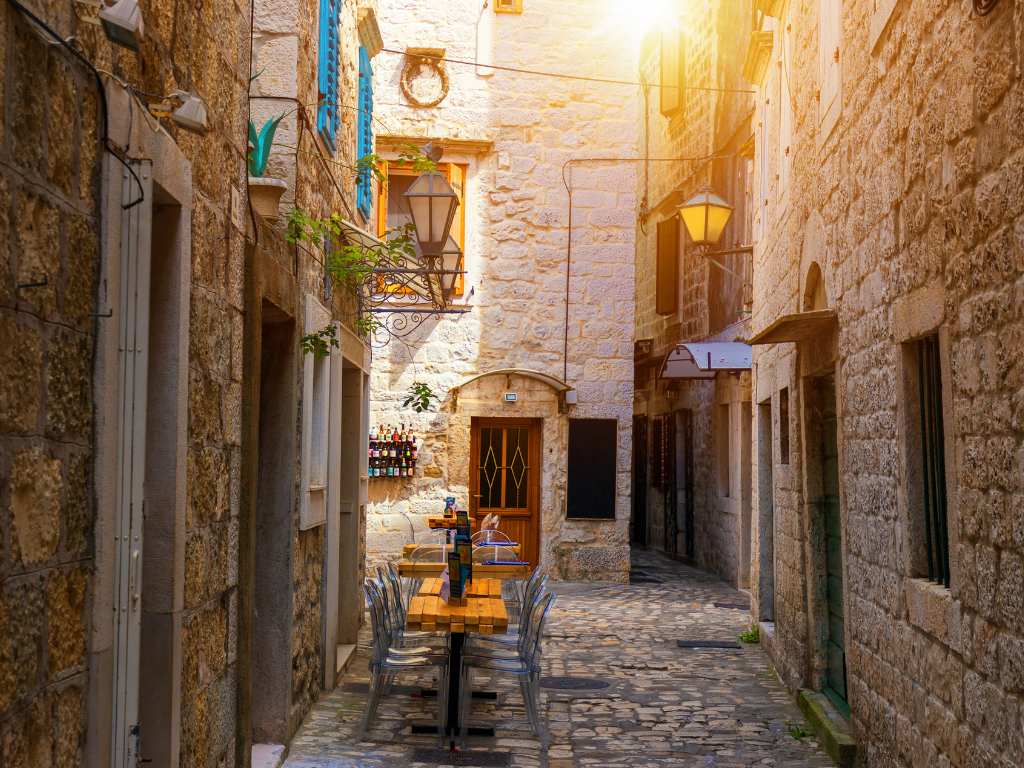
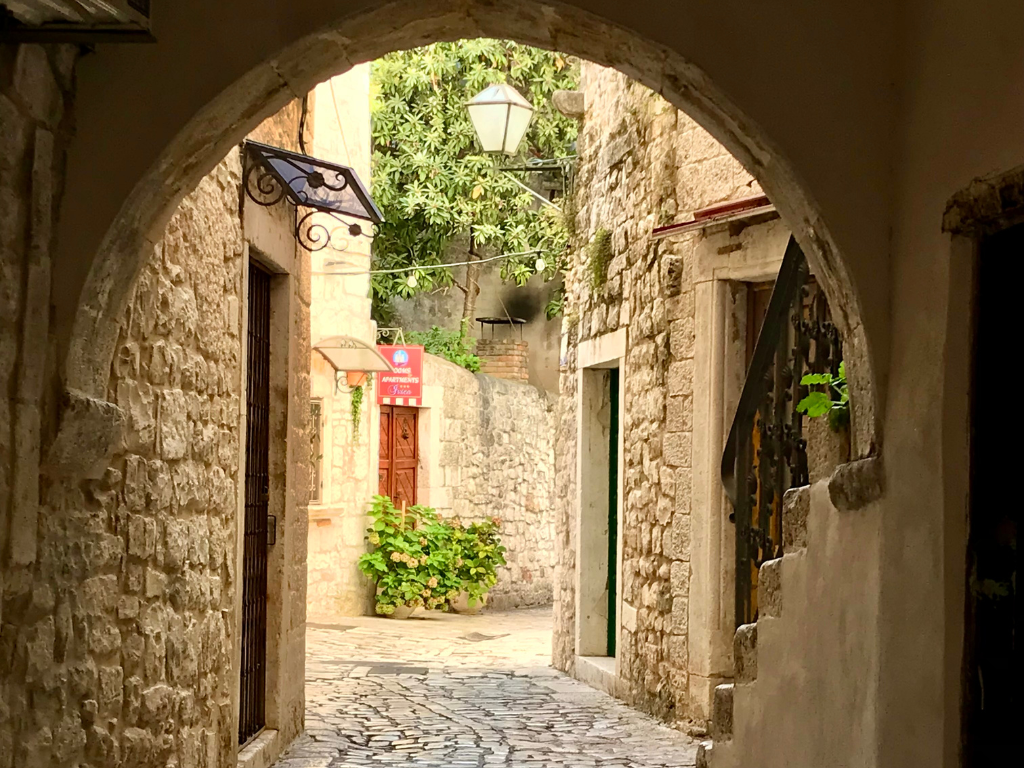
The best way to get to know Trogir is simply to set off on a walk through the old town. Narrow stone alleys will lead you to small squares, courtyards with Romanesque, Gothic, Renaissance and Baroque details. Thanks to its well preserved historic old town, Trogir was added to the UNESCO World Heritage List in 1997.
The heart of the town belongs to the Cathedral of St Lawrence. Construction began around 1200 and continued for several centuries, which is why it displays a variety of styles. Radovan’s Portal at the church entrance, completed in 1240, is one of the most important works of medieval art on the eastern Adriatic. On the main square right next to the cathedral you will also see the Ćipiko Palace.
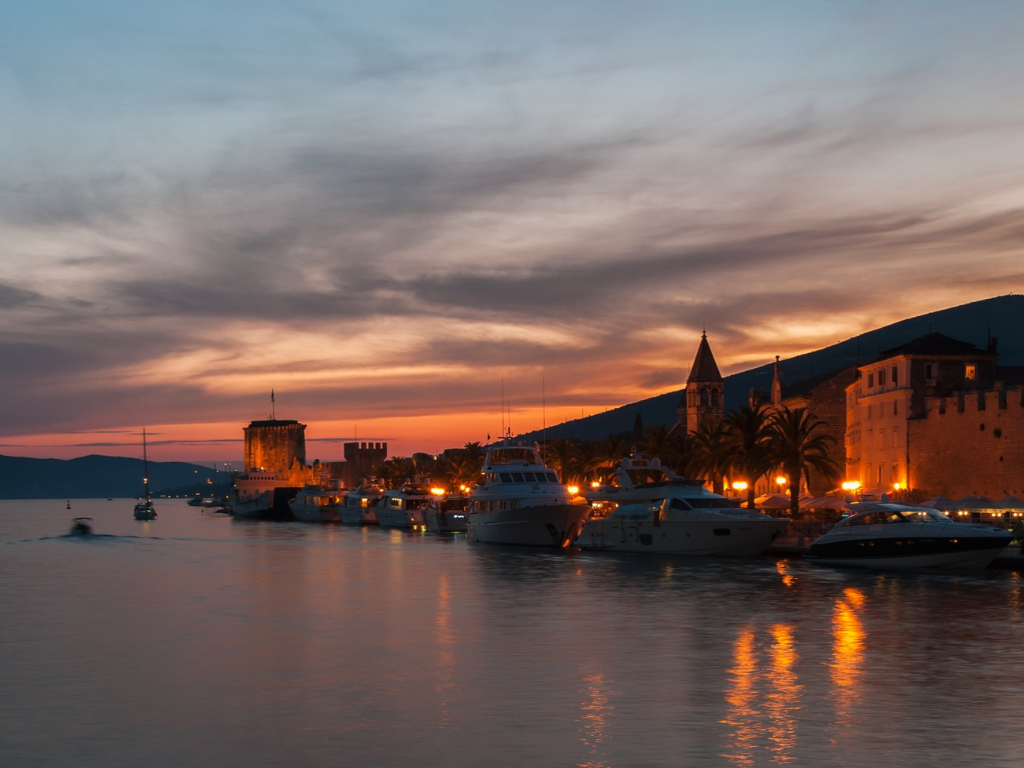
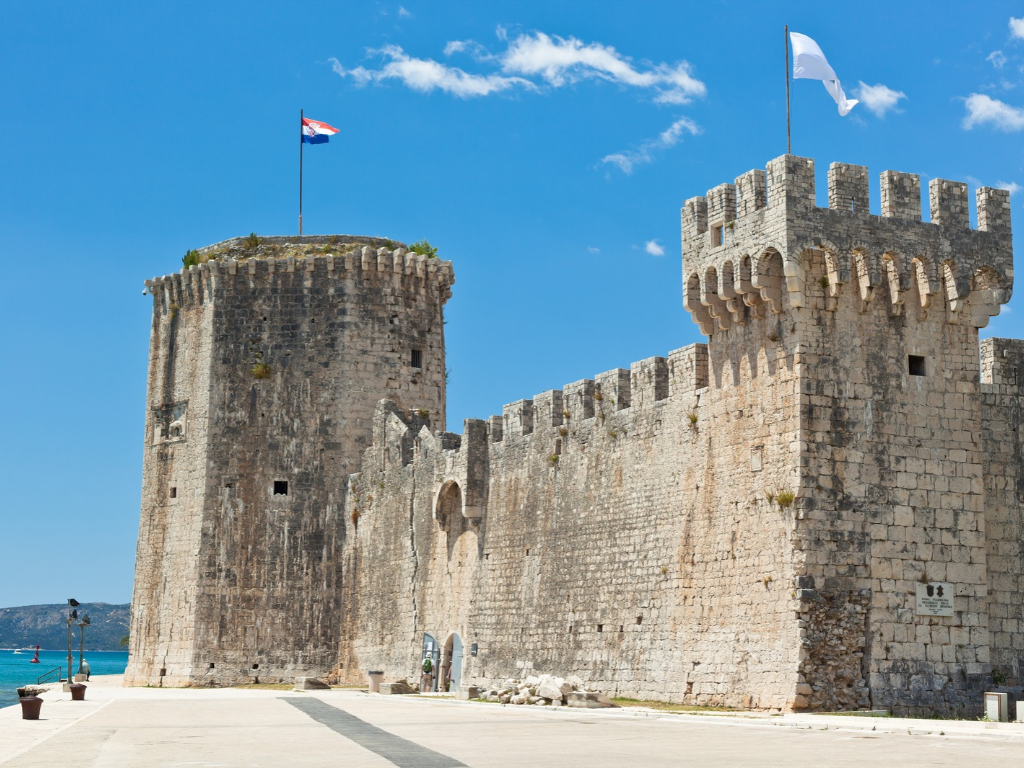
If you walk to the southwestern edge of the old town, you will come across the Kamerlengo Fortress, a 15th century Venetian stronghold. Today the fortress is one of the symbols of the town, and in summer it becomes a stage for concerts and other events.
Don’t miss the Benedictine Monastery of St Nicholas, founded in 1064. Its collection holds the relief of Kairos, the youngest son of Zeus according to Greek mythology, and Trogir’s unofficial mascot.
Surroundings
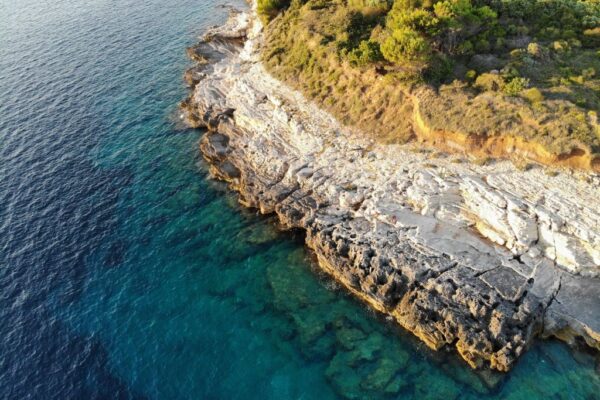
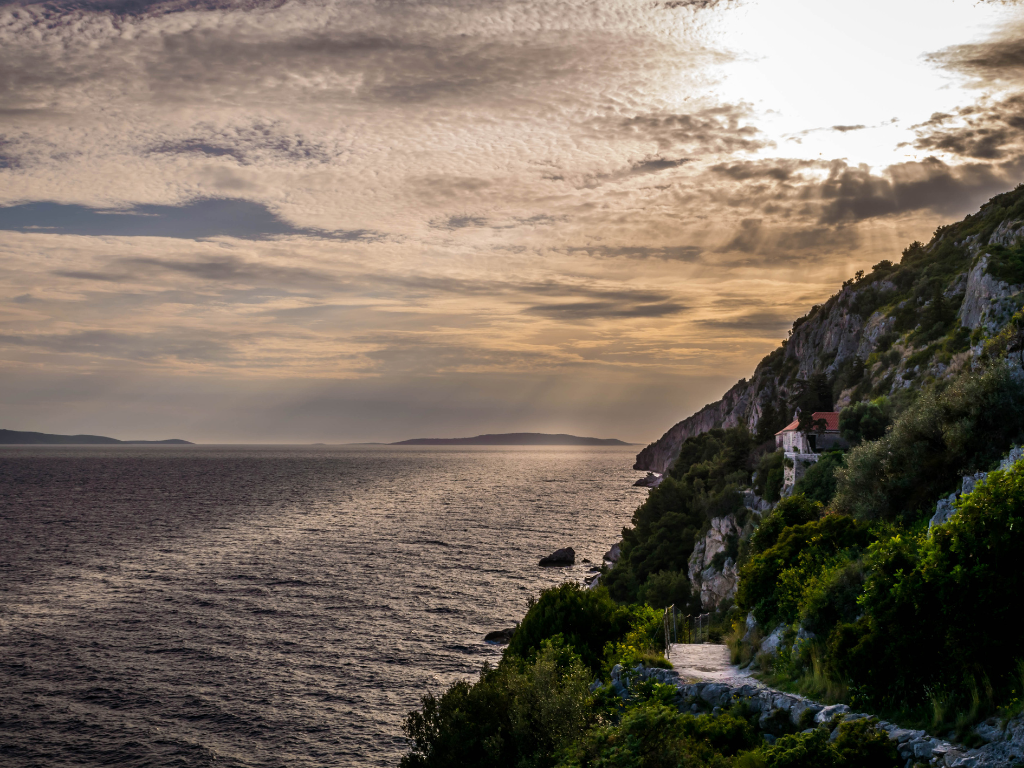
Čiovo: the island of Čiovo is connected to Trogir by a bridge, so a day trip is easy to arrange. The coastline is lined with nice beaches and coves, which makes Trogir a great choice for a beach day.
Pantan: Fresh water and salt water meet where the river Rika flows into the sea. The conditions formed a wetland called Pantan (Blato). The area is rich in plant and animal life and has protected reserve status.
Drvenik Veliki and the Blue Lagoon: if you have a whole day, visit the island of Drvenik Veliki. Nearby lie the Krknjaši islets, better known as the Plava Laguna (engl. Blue Lagoon), one of the most popular excursion spots in the Trogir archipelago.
Drvenik Mali: Drvenik Mali has indented coastline, shallow sea and unspoilt nature. It is ideal if you want to spend the day far from the busiest tourist spots.
Where to eat
Trogir’s cuisine has been shaped by both the sea and the town’s hinterland. On restaurant menus you will most often find fish and seafood, grilled dishes, peka, brudet and buzara, but also pašticada, lamb and homemade prosciutto. Here are a few addresses listed in the Michelin Guide:
- Il Ponte: Mediterranean cuisine prepared with contemporary techniques. Besides the à la carte menu, you can also try the tasting menu. Save room for dessert.
- Franka: Dishes are based on local fish and seafood, with the occasional Italian touch such as burrata as a starter. This season breakfast was on offer too.
- Restaurant Mare: The restaurant is located on Čiovo. Fish is the main star, but the menu also features meat and vegan dishes.
To round off your meal, save room for Trogir rafioli, the traditional sweet of the Trogir area. Perhaps you will even decide to make them yourself in the villa’s kitchen. 😊
Where to swim
- Okrug Gornji, Čiovo: the best known beach on the island, with a lively atmosphere, cafés and facilities for the whole day. The top choice if you like to be at the centre of the action.
- Saldun and Arbanija, Čiovo: smaller coves with crystal clear water, ideal for a relaxed day at the beach.
- Pantan, Trogir: a pebble and sand shoreline with natural shade thanks to the nearby pine forest.
- Medena, Seget Donji: a long stretch of coast from Trogir, a good choice for a full day at the beach and walks along the sea.
Best time to visit
July and August are the extreme in every sense: the liveliest atmosphere, the most excursion options, the most events, but also the biggest crowds. If sightseeing and pleasant temperatures matter more to you, choose late spring or early autumn, when the sea is warm and tourists are sparse. Winter brings the fewest crowds, so you will have the town all to yourself (but keep in mind that this also means the fewest things to do).
Where to stay
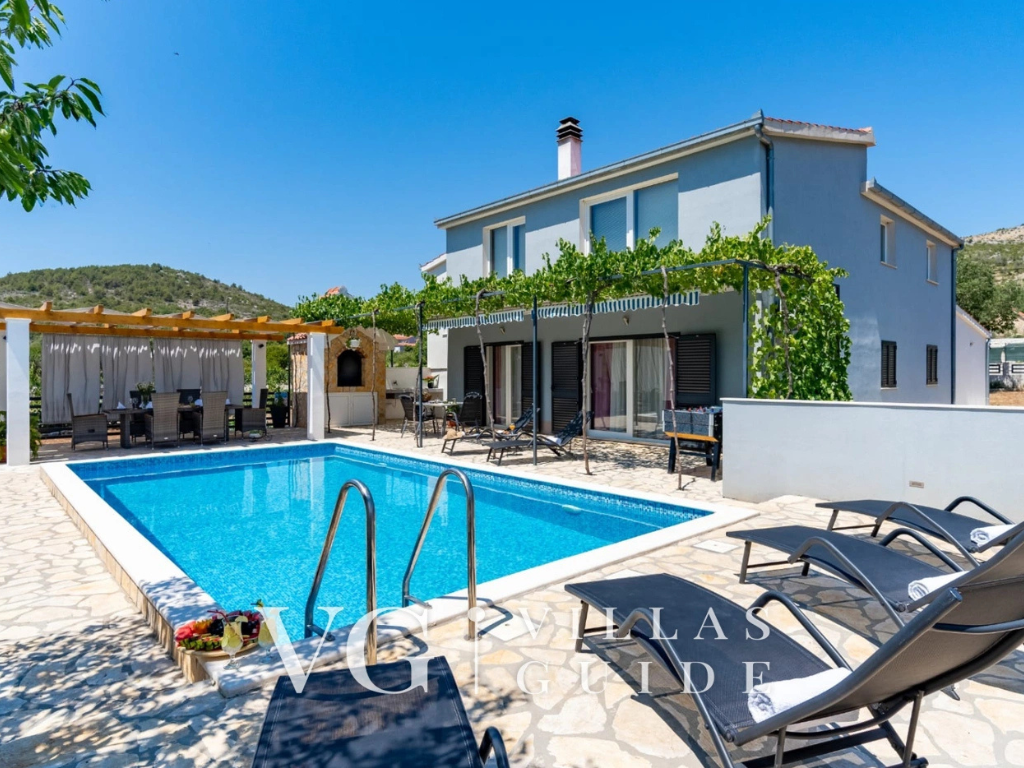
You can stay in Trogir’s hinterland. Here are three holiday homes we recommend:
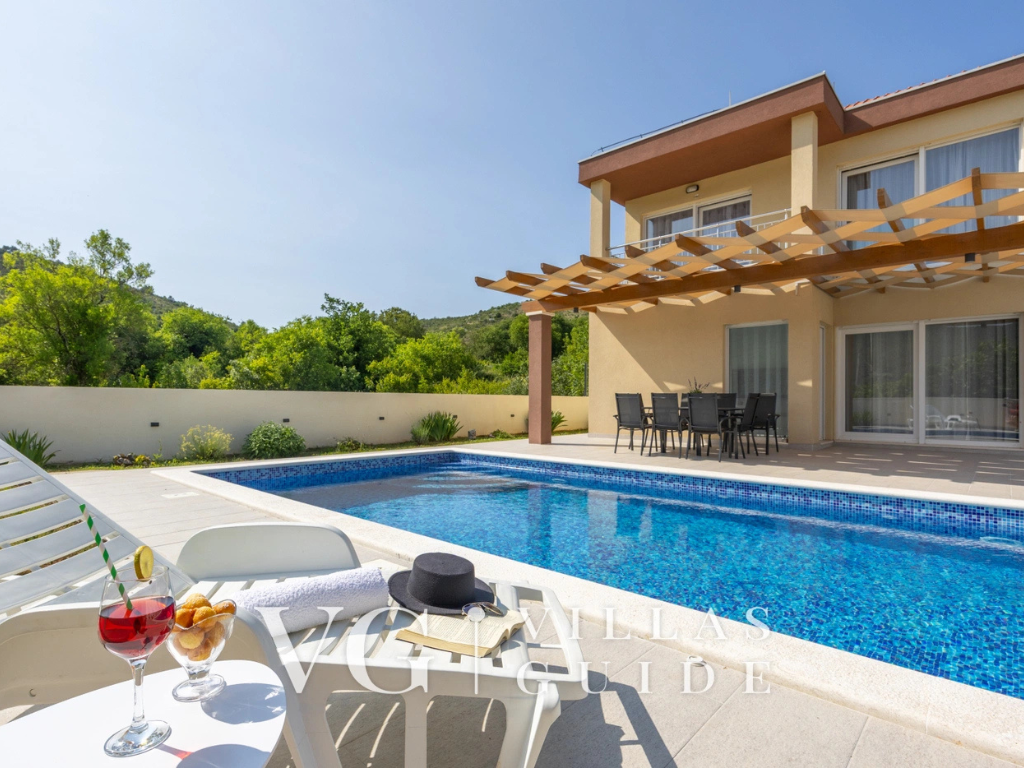
- Holiday home Silvija: it can host up to six people, with three bedrooms, a private pool and a fenced yard with a covered terrace and barbecue. Children will love the trampoline and swings.
- Holiday home Neda: for a larger group or two families, up to 12 guests in two separate units (ground floor and upper floor). It offers a 54 m² pool, a sauna, table tennis, badminton and a children’s playground.
- Villa Ivan – Primorski Dolac: a modern house surrounded by greenery. It can host eight people in four bedrooms with three bathrooms. There is also a 36 m² pool and a terrace with a barbecue.
Trogir and the coast are a short drive away, so you can combine mornings and evenings at the villa with exploring the UNESCO listed old town and taking trips around Central Dalmatia.
We hope our recommendations have shown you how special Trogir is. Now all that is left is to choose a villa nearby and enjoy your holiday.